

Wound Healing
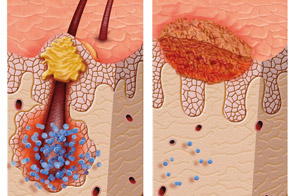 After an injury, the skin starts an immediate process of repairing of the affected region. This process includes three phases:
Inflammatory Phase: fibrin and insoluble proteins – essential part of the blood clots – are formed and connect to the exposed collagen to promote blood flow interruption – a process called hemostasis.
Inflammatory cells called neutrophils emerge in the early hours of the injury to annihilate the microbes, thus limiting the infection of the lesion. Subsequently, macrophages cells arrive to destroy the remaining microbes and help signal the proliferation of fibroblasts, the cells that are responsible for collagen formation.
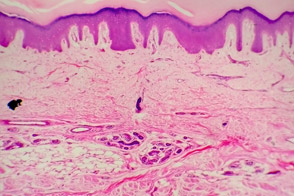
Macrophages play an important part in coordinating the healing process because they perform various functions in the tissue such as: (a) debridement, by enzymatical phagocytosis, (b) antimicrobial action, by releasing nitric oxide and oxygen radicals, (c) cell activation, by releasing growth factors, cytokines and fibronectins (d) synthesis and regulation of the protein matrix, by releasing growth factors (PDGF, TGF-β, EGF), regulatory cytokines (TNF-α, IL-1, IFN-γ) enzymes (collagenase and arginase, and prostaglandins (PGE 2), (e) promotion of angiogenesis, by releasing endothelial growth factors (VEGF, bFGF) fibroblast activation and cytokines (TNF-α).
2. Proliferative Phase: Fibroblasts are stimulated to synthesize collagen and form granulation tissue. This new tissue is fueled by the growth of new blood vessels through a process called angiogenesis.
3. Remodeling phase: This phase is characterized by the re-epithelialization that reconstructs the tissue. The new layer covers the injured skin and allows the repair process to continue. At this stage, the new tissue is put and practically restores the whole condition of the original tissue.
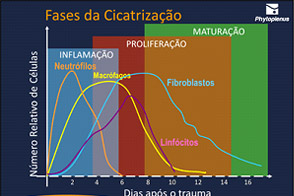
In chronic injuries, the healing process remains in the inflammatory phase for a long time or indefinitely. The immunocompetent cells, which are responsible not only for the coordination of cellular and biochemical events, but also for the resolution of wound healing, do not become fully functional and wildly release cytotoxic substances, which are normally used to fight pathogens and worsen of the lesion.
When an injury cannot fully escalate into re-epithelialization, external support is needed to facilitate the biochemical and cellular processes that are impaired. In this sense, external supports, such as topical medications, bandages, dressings and others, must show characteristics such as: (a) preservation of cellular activity at each stage, (b) constant maintenance of an appropriate physiological condition on the lesion, (c) promotion of microcirculation and satisfactory gas exchange, (d) inhibition of the extracellular matrix disruption, and (e) promotion of the synthesis of tissue growth factors. When a topical medication or a dressing does not enable on of these processes, the wound healing is compromised and results in a chronic lesion.
Some dressings that occlude the lesion and squeeze the peripheral circulation, stopping the exchange of oxygen in the healing tissue, are responsible for the failure of the treatment, and also stimulate the spreading of pathogens such as bacteria and fungi. The lack of oxygen in the tissue impairs the action of the macrophages and other important cells in the healing process. Other topical medications that have oxidant components in their formulations seriously harm the tissue repairing process, for the cytotoxic acts over the immunocompetent cells such as macrophages, which play a fundamental role on the coordination of the healing processes.
Last but not least, we ought to highlight that the processes that involve the repairing of a skin lesion must be precisely controlled, otherwise one may get sidetracked with damaging results on the tissue. The exuberant keloid scar tissue is an example of inadequate control of the repairing process that occurs in response to a skin lesion. Chronic lesions, associated with diseases such as diabetes and vascular and/or arterial deficiency, are also results of an inefficient repairing process of the organism on affected tissue. In cases where the healing process is ineffective, there is a need for an external support, such as dressings and/or topical medications that help the debridement, fight infections and stimulate vascular and epithelial cell proliferation, preserving the populations of the immunocompetent cells that are responsible for coordinating various tissue repairing events.